Showing posts with label United Nations. Show all posts

Thursday, February 9, 2012

The Path of the Pharaohs

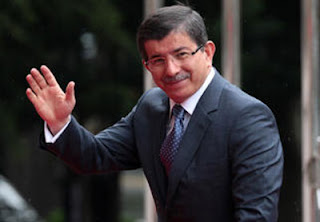
PHOTO from Radikal

Before paying a trip to Washington, Foreign Minister Ahmet Davutoglu outlined on Turkish television a new Turkish approach to Syria he is expected to share and discuss while in town. The new approach includes plans for a "Friends of Syria" contact group akin to the Libya Contract Group that met in Istanbul in the weeks before rebels seized power in Tripoli.

According to Davutoglu, Turkey has exhausted diplomacy with Syria. It first attempted to deal directly with Assad, and when those efforts failed, it turned to the Arab League. After the Arab League failed to stop the violence despite what Davutoglu characterized as its best efforts, Turkey joined the United States and other countries to work through the United Nations. After the Chinese and Russian veto on Feb. 4, however, new steps are needed to resolve the conflict and bring relief to the Syrian people.

Over the weekend, Davutoglu responded to the UN Security Council's failure to adopt a resolution regarding Syria by declaring that Turkey would be opening up its doors to refugees escaping the violence that intensified after the vote.

Then, on Tuesday, Prime Minister Erdogan announced that Turkey would be launching a new initiative regarding Syria. Erdogan's news followed comments that Assad had chosen the "path of the pharaohs," and that he would be punished for his decision. The prime minister's remarks came on the thirtieth anniversary of Hafez al-Assad's massacre of hundred at Hama, in whose footsteps he said Bashar, Hafez's son, was now following. Speaking rhetorically to Assad, Erdogan then declared that Assad would reap what he sowed.

On yesterday, Davutoglu followed up with details as to the initiative, announcing plans for a contact group that will include the Organization of Islamic Cooperation (OIC) countries, in addition to the Arab League and members of the UN Security Council. The foreign minister also discussed possible plans for bringing humanitarian aid to Syria, which raises the possibility of establishing a humanitarian corridor inside Syria for which Turkey, along with other countries and most likely the United Nations, would be responsible.

Turkey had been waiting for the outcome of Russian Foreign Minister Sergey Lavarov's talks with Assad to come to an end, and Davutoglu said that Assad's promises for reform announced soon after the meeting could not be trusted. 

Turkish newspapers report that Turkey is making plans to accommodate more refugees fleeing the conflict, including a container town to accommodate up to 10,000 refugees similar to that constructed in Van following Saddam Hussein's campaign against Iraqi Kurds. Syria has so far accepted 12,000 refugees.


UPDATE I (2/11/12) -- At the Center for Strategic and International Studies on Friday, Davutoglu linked the government's policies in Syria to Turkey's support for peoples instead of states. In the speech, Davutoglu reports that when asked why Turkey was friendly with Assad before the Arab Spring, he is able to easily respond that at this point Assad was not fighting against his own people.

The foreign minister's speech touched on the need to side with peoples instead of states in the new post-Cold War age, and he contextualized Syria as a state whereby the people had clearly turned against the state. Given this situation, Turkey could not be expected to continue to side with Assad.

I am sure CSIS is soon to post a transcript, but until then, you might read Davutoglu's remarks against Soli Ozel and Gencer Ozcan's recent article in the October issue of the Journal of Democracy on Turkish foreign policy and democracy promotion.

UPDATE II (2/15/11) --  Davutoglu met with U.S. Secretary of State Hillary Clinton where both reported Syria was at the top of their agenda. The leaders are expected to join representatives of the Arab League in Tunis on Feb. 24 to discuss a new approach to Syria. There still seems to exist difference on the American and Turkish sides as to whether Russia and China should be invited to the meeting. Also on the table will be the issue of a possible humanitarian corridor to be established in order to deliver aid to Syrians affected by the violence. Turkish papers are reporting Turkey to be in favor of opening up the corridor through the Mediterranean rather than using Turkish soil, a prospect Turkish officials are saying would pose a security risk.

Additionally, though Davutoglu continues to say all options are on the table, there seems to be little appetite for a buffer zone to be setup along the Turkish-Syrian border.

Also on Monday, and shortly after Davutoglu's visit with Cointon, U.S. Central Command head James N. Mattis held a meeting with Turkish Chief of General Staff Necdet Ozel presumably at which possible operations involving Syria were discussed.

According to Milliyet columnist Asli Aydintasbas, Syria is more keen for intervention than the United States and tabled a strategy to include military, diplomatic, and humanitarian elements while the American side is still reluctant to get to engaged in the conflict during an election year.

And, one more note: the Center for Strategic and International Studies has posted the video and transcript of remarks Davutoglu delivered there on Friday.

Tuesday, May 31, 2011

Return of the Mavi Marmara

PHOTO from Hurriyet Daily News

Thousands gathered in Taksim Square last night on the eve of the one-year anniversary of Israel's raid of the Turkish-flagged Mavi Marmara in which Israeli commandos eight Turkish citizens and one American of Turkish descent.

Yesterday morning, the International Relief Foundation (IHH) held a press conference announcing the organization is continuing to move forward with plans for 15 ships carrying 1,500 activists from 38 countries to sail to Gaza at the end of June. The Mavi Marmara is expected to be at the front-and-center.

Diplomatic relations also heated up around the one-year anniversary as Foreign Minister Ahmet Davutoglu said Turkey would retaliate should Israel once more carry out military operations on the ships. According to Israeli press reports, the Israel Defense Forces are mobilizing to meet the flotilla, though is focusing on counter-riot strategies. Israel Prime Minister Benjamin Netanyahu has said the flotilla will not be permitted to land in Gaza and that force will be used when and where necessary.

The United States is attempting to break the impasse, though Turkish government officials are have maintained their argument that they do not have the legal power to intervene to stop a Turkish NGO from carrying out such a mission.

In the meantime, UN Secretary-General Ban Ki-moon has extended the working period for the UN Panel of Inquiry currently investigating last year's raid.


UPDATE I (6/2) -- Hurriyet reports (in Turkish) the United States is planning to submit a proposal to Turkey by which Turkey would block IHH's flotilla plans in exchange for making Turkey the place of upcoming Israeli-Palestinian peace talks.

UPDATE II (6/6) --  Foreign Minister Ahmet Davutoglu has publicly called on the IHH to delay plans to send a flotilla to Gaza. The IHH rejected the foreign minister's request, arguing that the flotilla was necessary to providing Gazans with much needed aid and asserting sovereignty over their ports. The government is arguing that the IHH should wait to see what happens in the wake of the Rafah border crossing being opened (it is opened for civilian crossings, but not for aid supplies) and plans to install a new Palestinian unity government.

Saturday, May 22, 2010

Turkey in a Multipolar World

Last month, I wrote skeptically that Turkey might be risking too much in its efforts to secure an agreement with Iran over its nuclear program (see April 21 post). Though the future of the deal Brazil and Turkey brokered with Iran is far from certain, the ability of both to contradict the popular notion (especially in Washington) that a deal could only be reached under the pressure of sanctions is a true accomplishment that will boost recognition of both countries' emergent roles as diplomatic powers. The news last week that Brazilian President Luis Inácio Lula da Silva would be travelling to Tehran and that he might well be joined by Prime Minister Erdogan should the Iranians be serious about brokering a deal raised hopes for a deal, prompting contradictory reactions from Washington that can be interpreted any number of different ways. Announced on Monday, the deal (full text) will indubitably lend greater creedence to Turkey's efforts to pursue a dynamic role in rits onal and global politics, further breaking away from its Cold War role as a staunch ally of Wahsington. Taking a look at commonalities between Turkey and Brazil as aspirant powers, former New York Times Turkey correspondent Stephen Kinzer writes in The Guardian:
Turkey and Brazil, though half a world apart geographically, have much in common. Both are large countries that spent long years under military dominance, but have broken with that history and made decisive steps towards full democracy. Both are led by dynamic and ambitious leaders who have presided over remarkable economic booms. Both have already emerged as regional powers, but have grander ambitions to become world powers on the level of Russia, India and perhaps even China. Neither could fulfil those ambitions alone. Together, however, they form a partnership that holds tantalising possibilities.

No two countries have opened more new embassies around the world in the last couple of years than Turkey and Brazil. Senior Turkish diplomats return to Ankara once a year for a grand strategic conference, and at this year's meeting, held in January, Brazil's foreign minister, Celso Amorim, was among the main speakers.

Turkey and Brazil were once near-automatic supporters of Washington, but they have struck out on their own path. Distressed by what they saw as blundering American unilateralism that destabilised entire regions of the world, they have sought to defuse international confrontations and promote peaceful compromises instead. By felicitous coincidence, both are now nonpermanent members of the security council. This gave them special leverage over Iran. They have used it deftly.

During the cold war, the non-aligned movement tried to become a "third force" in world politics, but failed because it was too large and unwieldy. Turkey and Brazil are now emerging as the global force for compromise and dialogue that the non-aligned movement never was.
That said, the problems inherent in the deal, especially following Iran's announcement that it would continue to enrich uranium up to 20%, gives reason to think it might not work. Should the deal prove nothing more than a delaying tactic for Iran, the current ebullience surrounding the deal will surely diminish, as will to some degree the optimism of some that Turkey's foreign policy ambitions can play a constructive force in global politics.

Wednesday, April 21, 2010

The Trouble With Reality

From Hurriyet Daily News:

Turkey urged Iran on Tuesday to take steps to defuse international concerns over its nuclear program, emphasizing its willingness to mediate between Tehran and world powers.

Iran needs to show goodwill and commitment to the international community to reduce concerns over its nuclear program, Foreign Minister Ahmet Davutoğlu said in Tehran on Tuesday, adding that he had made some concrete proposals to the Iranians.

“We are continuing to work to stop unwanted developments that could hurt Iran, Turkey and our entire region. We are discussing new alternatives. We should work on reaching them together,” Davutoğlu told reporters at a joint press conference with his Iranian counterpart, Manouchehr Mottaki.

Davutoğlu arrived in Tehran late Monday and conducted high-level talks with Iranian officials Tuesday. He met with President Mahmoud Ahmadinejad, Parliament Speaker Ali Larijani and Secretary-General Said Jalili of the National Security Council before departing for Serbia in the late afternoon.

“There are some new concrete proposals made by us. We have conveyed our thoughts to the Iranians and I can tell you that I observed a very good atmosphere and response here,” said Davutoğlu in Tehran. The foreign minister said he would engage more and discuss Iranian responses with Western nations.
The Tehran conference Davutoglu attended is largely viewed as an attempt to counter the summit the Obama Administration organized in Washington two weeks ago. Turkey attended both summits, and again, the question is as it has been before: Does Turkey have the diplomatic clout to pull off a deal and appease both the West and Iran, and if it does not, what will failure do to its "zero problems" with neighbors policy? Turkey is in deep diplomatic waters here, risking much at a time when tensions continue to rise regardless. The trouble with reality is that sometimes it requires hard choices, and Turkey's policy toward Iran at the moment is seen by many as a test of just where the country will go in the future. I think this is more than a bit of an overstatement, but there are plenty of fixed eyes on Ankara waiting to see if Turkey can prove itself a bridge here. For a skeptical response by U.S. State Department spokesman Philip Crowley, click here. For recent commentary on Turkey's posturing, including Turkey's position on Israel and and its nuclear program, see Yigal Schleifer's post from a few days ago.

Friday, January 23, 2009

Obama Reigns in Era of New Opportunity in U.S.-Turkey Relations

PHOTO from the New York Times

President Obama's inauguration on Tuesday excited millions around the world hopeful that a new American administration -- led by a seemingly very different man -- might translate into real and meaningful change. Like elsewhere across the globe, Obama's message of change, perceived moderation, and calls for transparent government are well received by Turks. Upon Obama's election, 44 sheep were slaughtered in the eastern city of Van to commemorate Obama's election as the 44th president of the United States. A recent BBC poll (taken before the Gaza crisis) revealed that 51 percent of Turks believe Obama will strengthen American relations with the rest of the world, a number up from 11 percent just six months ago when most Turks seemed despairingly indifferent to the results of the U.S. election. Not only is the increase significant, but also the sheer number of hopeful people: Turks are one of the most anti-American populations in the world, and conspiracy theories about U.S. support for the PKK and Middle East designs abound (see "I Am Not in the CIA," June 11 post, for more background). With such political capital at his disposal, President Obama has a real opportunity to transform U.S.-Turkey relations for the better. The U.S. and Turkey have plenty of national interests in common and foreign policy areas ripe for mutual cooperation are many.

As I laid out in Foreign Policy in Focus in November, Turkey is teetering between East and West in its foreign policy orientation. Although Turkey has historically linked itself to the West, largely anchored by its European vocation and NATO membership, a growing number of Turks have begun to advocate that Turkey should strengthen relations with Eastern powers, especially Russia, and/or adopt a more isolationist posture. Essential to determining Turkey's future relations with the West will be the outcome of its accession to the European Union, as well as good relations with the United States. In order to assure both, the United States should do all it can to facilitate Turkish accession and come to terms with a Turkey more independent in its thinking, and with foreign policy aspirations more its own than at any time during the Cold War. The U.S.-Turkey relationship is in transition, and Cold War understandings of Turkey are anachronistic. Russia is now Turkey's largest trading partner, and Ankara is seeking better relations with Muslim capitals throughout the Middle East. The more complex relationship between Europe and the United States also plays a hand. Europe and America are not always on the same page, and Turkey should not be expected to choose between the two -- for an example, look no further than European opposition to the invasion of the Iraq. The ambitious foreign policy of Turkey's AKP-led government seeks to expand Turkey's soft power and restore relations with countries that were once provinces over which the Ottomans were suzerain (see Mustafa Akyol, Newsweek, Dec. 6). As Turkey endeavors to meet its foreign policy objectives -- and, discover their implications in so doing -- the United States should look for areas of overlapping interest, meanwhile doing all it can to anchor Turkey firmly to the West.

The United States should build multilateral ties with Turkish NGOs, businesses, and cultural/educational institutions. By way of this new multilateral approach (Cf. Mary Kaldor, Boston Review, Feb./March 2005), President Obama will not only bolster support for inter-state diplomacy, but build the kinds of deep, inter-penetrating social ties that will not only counter anti-Americanism inside Turkey, but provide the cement for friendly future relations. Obama would also do well to promote Turkey within NATO, praising the productive role it is playing in Afghanistan and the potential it has in brokering peace in the Middle East. In terms of NATO, Obama would do well to encourage Turkey to assent to the Berlin Plus Agreement, uniting Turkey with the rest of Europe in support of a mechanism important to the EU's Common European Security and Defense Policy. President Obama would also be well-advised to encourage a diplomatic solution to Cyprus, taking advantage of the election of moderates on both the Greek and Turkish-Cypriot sides so that a UN-sponsored bicommunal solution again becomes a viable option.

The Obama Administration should do everything in its power to support human rights and democracy in Turkey, strengthening governing institutions by standing firmly behind pro-reform/accession forces inside Turkey and the European Union. President Bush was rather lackadaisical in his support of the EU process, and criticism of human rights/support for democratic institutions in Turkey has been lacking in the past eight years. When sinister forces threatened to topple the AKP-elected government last year and sought to undermine the election of President Gül the year before that, the United States did little to voice its disapproval, leaving Europe largely alone in its vehement opposition to these anti-democratic posturings. While AKP survived the closure case, its leaders have not forgotten the lack of support(see Henri Barkey, Washington Post, Aug. 23). President Obama should address this lacuna quickly and steadfastly by expressing solidarity with Turkish democratization efforts, including the salvation of AKP at the Constitutional Court last July -- though, disappointingly, AKP was found guilty of the trumped up charges it faced, just barely escaping closure.

Concomitantly, President Obama will do well to ignore the falsehoods and propaganda coming from neoconservative think-tanks and journals like the Washington Institute for Near East Policy and the Middle East Quarterly (see my posts of Nov. 24 and April 18; also, Avni Dogru, Foreign Policy In Focus, July 24). Turkish press have a tendency to fixate and generate conspiracy theories based on the publications and public statements of figures like Michael Rubin, and Obama would do the U.S.' relationship well if it makes clear from the beginning that these people have no influence in policy making.

And, finally, one last thing the United States might do to bulwark democratization is demonstrate its support for the ongoing Ergenekon investigation. Although the United States is well-advised to stay far removed from the volatile domestic politics in which the investigation is inextricably entangled, President Obama could further strengthen relations if he were to make a public statement expressing support for the opportunity the investigation offers to extirpate lingering elements of Turkey's historic 'deep state,' the shadowy, obfuscate network of anti-democratic forces hidden beneath state structures. In doing, the President should also call for government transparency during the investigation. The impact of such a position would bolster support for the United States within AKP and its political constituency, but might also -- depending on how it is made -- curry favor with secular leftist Turks, many of whom still remember the 1980 military coup in which deep state elements were indubitably involved. To add weight to this second point, it is appropriate to note the significant amount of conjecture about U.S. involvement in the anti-leftist coup ('Operation Gladio,' see 25/1/08 post), resentment around which is still a part of Turkish historical memory.

Obama foreign policy toward Turkey is not without its usual pitfalls and opportunities, though Ankara's neo-Ottoman foreign policy has perhaps made things a bit easier. The Armenian 'genocide' question still persists, as does the United States' role in Iraq, namely the Kurdish Regional Government (KRG) and the use of northern Iraq as a safe haven for the PKK. However, thanks to Turkey's rapprochement with Armenia and the KRG, both situations, respectively, might be improved. More difficult will be the United States' support for Israel, which given the size and intensity of Turkish protests against Israel's recent invasion of Gaza, poses the risk of infecting good relations by the sheer potential preponderance of the issue. Ankara's new interest in the conflict, not to mention the demonstrated willingness of the Israelis to inflict mass civilian casualties, make the situation in the Palestine Occupied Territories even more explosive in terms of U.S.-Turkey relations.

Turkey's expanding foreign policy might well prove of mutual benefit to both states. There is hope that Turkey's symbiotic relationship with Iran places Turkey in a useful position to mediate between the United States and the Islamic Republic. Shortly after Obama's victory, identifying Iran as the United States' most vexing challenge, Prime Minister Erdoğan expressed Turkey's willingness to help the United States negotiate a solution. Further, Turkey's efforts to achieve an alliance between Caucasus states are critical to the security of Central Asia, a potentially effective way to protect the sovereignty of these newly-independent states.

And, as a hopeful aside, in December, Obama transition aides mentioned the President is considering a major speech debunking Huntington's infamous "Clash of Civilizations" thesis to be delivered in a Muslim capital -- might it be İstanbul?

(For a wonderfully concise analysis and fairly dead-on take on the U.S.-Turkey relationship and what Obama might do to improve it, see Spencer P. Boyer and Brian Katulis, "The Neglected Alliance Restoring U.S.–Turkish Relations to Meet 21st Century Challenges," Center for American Progress, December 2008.)

Friday, December 5, 2008

Turkey Ratifies UN Convention on Rights of the Disabled

From Bianet:
The Parliament has unanimously ratified the UN Convention on the Rights of Persons with Disabilities. The number of the countries that ratified the convention has become 42.

Turkey had signed this convention on March 30, 2007, but not ratified it until today.

The activists for the rights of the disabled were campaigning for the ratification of the convention. At the press statement made yesterday (December 3) for the International Day of Persons with Disabilities, Turkey’s Disabled Association (TSD) had demanded ratification of the convention and the optional protocol.

The optional protocol is next
The convention imposes on the state obligations regarding incorporating the persons with disabilities into the society, protecting them from discrimination and stigmatization, making all the services accessible to them and in the matter of equality before the law.

The optional protocol, on the other hand, provides the individuals and the groups with the ability to apply directly to the UN Commission for the Rights of the Persons with the Disabilities, once all the internal legal means in their countries are exhausted. (TK/TB)

Wednesday, December 3, 2008

Spooky

From Emrullah Uslu at EDM:
The leader of the IP, Dogu Perincek, now an Ergenekon suspect, is a former Maoist, who advocates “Eurasianism” as opposed to Turkish membership in the EU and NATO. Despite having only marginal public support, he has become an important figure dominating public debates in recent years.

In one of his interviews Tuncay Guney claims that Dogu Perincek was the author of Ergenekon’s program. Guney says that the purpose of the Ergenekon program was to promote Turkey membership in the Shanghai Five (Bugun, September 11). The Shanghai Five, which consists of China, Kazakhstan, Kyrgyzstan, Russia, and Tajikistan, emerged from demilitarization talks that the four former Soviet republics held with China in 1996 to counter U.S influence in Asia (Newsweek Korea, May 4, 2001).

Zekeriya Ozturk, another Ergenekon suspect who once worked for the IP’s TV network, also accused Perincek of being an agent working for the Russian and Chinese intelligence services; but Perincek denied the allegations (Radikal, March 30). Perincek’s close associate Adnan Akfirat, another Ergenekon suspect, is the chairman of the Turkish-Chinese business association (www.chinaembassy.org.tr, June 6, 2006). It should also be noted that Perincek was an early proponent of Turkish-China-Russia relations. His daughter is a journalist working for Chinese Public Radio’s Turkish Program (Yeni Safak, April 26); and his son, Mehmet Bora Perincek, is a researcher in Moscow and is establishing connections between the Turkish Worker’s Party and the Russian Eurasia party. In a meeting between the two parties it was declared:


The United States has always tried to beleaguer our particularly continental civilizations. Today this process is being continued under the patronage of American secret centers [promoting] the concept of pan-Turkism in Turkey and national chauvinism in Russia toward the Turkic nations. “The Eurasia” and “The Worker’s Party” representatives came to an understanding about the concerted consultations, conferences, and colloquiums in the sphere of Russian-Turkish geopolitical rapprochement. “The Worker’s Party” leadership has been interested in the unique means of solving interethnic conflicts developed by the experts for the Center of Geopolitical Examinations and “The Eurasia” party on the basis of the concept of “nations’ rights.” They proposed that “The Eurasia” take part in a conference of groups working on the solution of the Turkish-Greek conflict in Cyprus on the grounds of the geopolitical Eurasian methodology. “The Worker’s Party” responded willingly to the proposal of taking part in organizing the international Eurasian movement. These exciting ideas have been lined up by its intellectuals for a long time. We are also willing to begin a number of concerted projects in the sphere of TV broadcasting, publishing activities, [and] economic collaboration (http://www.evrazia.org, November 11, 2003).


As the meeting notes show, the Worker’s Party suddenly started advocating Turkish nationalist policies. Veli Kucuk, a retired general and a leading Ergenekon suspect, brought the younger Perincek, who participated in the 2003 meeting in Russia, together with Levent Temiz, another Ergenekon suspect, who was then the Nationalist Movement Party (MHP)’s youth leader. In 2003 the two formed a youth alliance between the Maoists and Turkish Nationalists, who were once fiercely opposed to each other (Zaman, January 15, 2004).

As was planned at the meeting in Moscow, the Workers’ Party issued an invitation to Alexander Dugin to attend the International Eurasia conference in Ankara. Dugin, the leader of the Eurasian movement, was introduced as an adviser to Russian President Vladimir Putin. Former Turkish President Suleyman Demirel; former Turkish Cypriot President Rauf Denktas; the Iranian and Chinese ambassadors; former chairman of the National Security Council General Tuncer Kilinc, Ret.; former commander of the Gendarmes Sener Eruygur, now an Ergenekon suspect; and the leaders of the Workers Party attended the conference to discuss Turkey’s role in Eurasia (Ulusal Kanal, December 6, 2004).

In a live TV broadcast, Guney further accused Dogu Perincek as playing a vital role in bringing Turkey closer to Russia and China. Guney stated, “Dogu Perincek should reveal why Putin’s people provided economic and ideological support to the Eurasia Conference” (Taraf, November 2).

Given Tuncay Guney’s affiliation with the MIT, it seems very likely that the intelligence service used Guney to penetrate the Ergenekon network in order to detect activities aimed at shifting Turkey’s direction from the West to Eurasia.

Monday, October 20, 2008

Turkey Elected to Security Council


From TDN:
Turkey's foreign policymakers bear a greater responsibility now, after the country was elected Friday as a non-permanent member on the U.N. Security Council, or UNSC, for 2009-2010, after 48 years of absence. Turkey previously held a seat on the Security Council in 1951-52, 1954-55 and 1961, and will now retake its seat in January 2009.

Instead of being forced to take sides on the Security Council, experts say Turkey will lean even more toward its tendency to find a middle path between contending parties, especially in the Iran nuclear row, one of the most pressing issues on the Security Council agenda.

“Turkey has been playing a positive role in the region and I think that this will reinforce Turkey's tendency to not to take sides in regional conflicts and act as a mediator looking for the best of all parties,” said Hugh Pope, a senior analyst for the International Crisis Group, speaking to the Turkish Daily News yesterday.

Retired Ambassador İnal Batu, who represented Turkey at the United Nations, said Turkey would not be forced to follow any particular path and would bring its own approach to regional tensions. “If we were a European Union member, we would have to act accordingly. But we are not, and just like we did not say alright to everything the U.S. demanded on Iran, we can resume doing so in our position on the Security Council,” Batu said.

Fuat Keyman, a professor of International Relations at Koç University, struck a similar note. “On Iran, Turkey may choose one of two choices. One is to assume a status quo stance, which would in fact negate any significance of its membership. But it can also give weight to diplomacy and promote dialogue. I think this is the vision of the government. That's one of the factors that won Turkey the seat in the first place,” Keyman said.
For full article, click here.