One of the stories I overlooked last week was the Supreme Court of Appeals' rejection of a petition to hear the case of former Chief of General Staff Ilker Basbug. The court ruled that it could not hear Basbug's case because he had been charged with terrorism, and that therefore the specially-authorized court responsible for his launching his prosecution had jurisdiction.
Last month's news of Basbug's arrest caught nearly everyone by surprise, and ratcheted up questions as to just how far the specially-authorized courts charged with the Ergenekon and Sledgehammer investigations are willing to go. For background on Basbug and the controversy over whether it should be the Supreme Court or the specially-authorized court that brought the indictment, in addition to some background as to the division within the AKP thanks to pro-Gulen forces, click here.
At the same time, it appears specially-authorized prosecutors are also digging deeper into figures involved in the Feb. 28 process, the 1997 postmodern coup that brought about the demise of Erbakan's Islamist Refah-party and its governing coalition. Leading figures in the AKP have long resented the Feb. 28 process, and historical memory of the events continues to influence AKP politicians and its supporters (see Feb. 7 post).
The event is known as the Feb. 28 process since this is the date on which the National Security Council (MGK) met to begin a protracted process through the spring that ultimately resulted in the government's falling and a series of new laws and restrictions on Islamist political activity. Standards of education were changed to counter the rising popularity of imam-hatip high schools (religious high schools where students receive a mix of standard and theological curriculum), regulations on the headscarf were strengthened, the Refah party was closed, and numerous Islamist politicians, including the prime minister, banned from politics and tried in courts for offenses against the secular unity of the state.
According to Milliyet, four civilian officers working in the MGK at the time have been asked to give testimony as part of the investigation. The paper reports that the officers were working in the high ranks of the institution, and played a role in writing the various orders and memos that guided the coup.
At the same time, government officials are starting to talk about possible reform of laws allowing for specially-authorized courts and prosecutors. These developments follow the crisis with Hakan Fidan and apparent power move by elements supported by religious leader Fethullah Gulen. Yet it seems for the moment that Basbug's trial will go on despite President Gul's call for the former chief to have his case heard at the higher court. Critics of Erdogan have pointed out that the prime minister had no problem in saving Fidan from prosecution, but are willing to take no such measure to save Basbug despite the apparent cooked-up charges against him.
The specially-authorized court has accepted the 39-page indictment against Basbug in which he is charged with planning to topple the government multiple times, the last and most critical to the charges being through a plan to create numerous websites that would spread black propaganda ("psychological operations") against the government and foment the conditions for a coup. The indictment also alleges that when Basbug was Land Forces Commander he also planned to overthrow the government, but gave up when he realized he did not have the resources to carry through his plans.
Evidence in the indictment is shoddy at best, largely consisting of various accusations and innuendo, as well as circumstantial links to other figures charged with terrorism, including former Cumhuriyet columnist Mustafa Balbay. Basbug gave an interview to Balbay in 2004 on negotiations with Cyprus, but did so at the time anonymously.
Basbug has denied the charges in the indictment, saying that he did not even have a computer in his office and that if the military truly planned to overthrow the government, it had more powerful means at its disposal than websites.
The President's State Inspection Board today released its report on the assassination of Hrant Dink. The 649-page report comes one month after the court hearing the case of 18 defendants accused of organizing the plot found no evidence to establish a connection that Dink's murder was not but a random act of violence carried out by a few ultra-nationalist youth--not the state-linked conspiracy which Dink's lawyers and supporters have alleged was at work. For background, click here. The report, though not binding, sends a powerful message to the Supreme Court of Appeals to re-open the investigation and commence a new trial, a decision that should come by year's end.
The State Inspection Board decided to release its report following the public outcry after the Dink trial came to a close, which at the time the president and other AKP officials cautiously denounced while urging the public to wait for the appeals process to come to an end. Its contents blame Dink's death in part on the negligence of state officials, and suggests that the trial of those officials should have never occurred separate from the trial of the 18 defendants, a point argued by Dink's lawyers from the very beginning.
According to Milliyet, the report also documents lack of coordination between the gendarme in Trabzon and police in Trabzon and Istanbul, as well as calls into question the Samsun police officers who were shown posing with Dink's young killer, Ogun Samast, days after the murder. Just as importantly, it calls into doubt the work of the Istanbul court and its verdict, citing that the investigation failed to take into account possible connections between the accused conspirators and state officials.
UPDATE I (2/25) -- The full verdict of the Istanbul court has been released one month after being announced. It points to the possible existence of links between the conspirators and the state, but as the chief judge Rustem Erilyilmaz told media soon after the trial's conclusion, argues the court lacked evidence to issue a ruling on the matter.
Perhaps no issue is more revealing of the struggle for liberal democracy in Turkey than the assassination of Turkish Armenian journalist Hrant Dink and the trial of members of a likely state-linked organization that gunned him down on Jan. 19, 2007.
Almost five years to the date of what was a very calculated murder, the Istanbul court hearing the case of 19 defendants accused of participating in the conspiracy to slay Dink ruled on Jan. 17 that there was indeed no organization, no conspiracy. Instead, the court portrayed the assassination as a random act of violence carried out by two ultra-nationalist youths acting alone. The court did not even touch the issue of links between state officials and the organization that have been revealed in the five years following the assassination. For more on the verdict from Reporters Without Borders, click here.
Not a Random Act of Violence
Dink presaged his murder, telling friends before his murder "that his heart was a 'timid pigeon' waiting for bad things to happen (see June 26, 2008 post). Dink had begun receiving threats from ultra-nationalists in 2004 following an article he wrote for the Turkish Armenian paper Agos, over which he presided as editor. In the article, Dink claimed that Sabiha Gokcen, Ataturk's much beloved adopted daughter, was an Armenian orphan. The article earned him the scorn of then Chief of General Staff Yasar Buyukanit, who denounced the article as a crime against national unity.
Before 2006, Dink had been subject to numerous court cases because of his questioning of an ethno-national conception of Turkish identity and his writing on the 1915 massacre of tens of thousands of Armenians. Throughout his work, Dink tried to bridge divides between Turks, Armenians, and Turkish Armenians, challenging both Turkish and Armenian identity, polarizing approaches to the genocide issue, and the general recalcitrance of the two sides. He did this as only a Turkish Armenian could, and his thinking challenged fellow Turkish citizens and ethnic Armenians alike. Most of all, Dink represented the expression of difference -- not just being different, but expressing it, and doing so always as an individual guided by free thought and its commensurate dignities. His writing, and that he attracted so many fans, Turkish and Armenians, is a testament to where Turkey has come since its founding and the longing for liberalism shared by so many of its citizens.
Yet not all were so content with Dink's ideas, his constant challenging of Turkish state and society. In 2004, Dink began receiving numerous death threats. The gravity of their danger to Dink's life prompted the deputy director of security in Istanbul to order police in Bakirkoy, where he lived, and Sisli, where he worked at Agos, to make provide for his protection.
In February 2006, intelligence of the murder conspiracy to which he would soon fall victim made their way from police in Trabzon to Istanbul. The memo from security officials in Trabzon stated, and quite simply, that Yasin Hayal, a known ultra-nationalist in the Black Sea province, was going to kill Dink. Less than one year later, Hayal, acting alongside 17-year-old gunman Ogun Samast, gunned down Dink outside Agos's offices.
Yet it seems the memo, ranked "low priority" by Trabzon police chief Ramazan Akyurek, was not paid much attention, if any, by Istanbul police, and little action was taken by either authority nor the gendarme in Trabzon, who were also watching the conspirators, to halt the assassination. Akyurek has since been promoted to head the Board of Inspectors in the General Directorate for Security. Dink knew his death was coming, and so did members of the Istanbul and Trabzon police, as well as the Trabzon gendarme. Meanwhile, Nedim Sener, one of the journalists who took the Dink investigation seriously and documented what the police knew before the murder, has been jailed on charges of being linked to the Ergenekon terrorist organization.
To offer further damning evidence of the neglect -- and quite possibly, involvement -- of elements within the Turkish security forces, one of Dink's assassins, young trigger-man Ogun Samast, posed with police officers in Samsun behind a Turkish flag just two days after the murder. While government officials have complimented themselves on apprehending Samast and other conspirators soon after the murder, adequate explanations for this photograph and the events before the murder have yet to come to the forefront, and according to many of Dink's supporters, have indeed been subject to a massive cover-up in which the state is complicit.
Where Does the Government Fit In?
Indeed, the more than four-year trial of Dink's conspirators has been hindered from the beginning due to an inability, and perhaps unwillingness, to procure evidence from state security offices, as well as government agencies such as the Telecommunications Board (TIB), which only last December turned over evidence documenting phone conversations and text message exchanges between the conspirators. TIB, citing a 2007 provision by the Justice Ministry related to the use of phone records in criminal investigations, had refused to turn over evidence for more than four years following the murder. Video footage of the street on which Dink was shot was erased from cameras soon after the incident, another fact that has led to accusations against the police ranging from neglect to complicity.
As Hurriyet columnist Sedat Ergin points out, efforts, or lack thereof, to hold state officials to account for their role in the murder have given way to serious misgivings on the part of the Turkish public. In 2008, and administrative court acquitted police of neglect while failing to really delve into the events in the days and months before the murder, and in 2009, another effort to investigate the role of security officials was blocked by the Interior Ministry, which at the time and just as today, was controlled by the ruling Justice and Development Party (AKP). The gendarme is the only state organ wherein an official has been found responsible for neglecting to prevent Dink's murder.
Though AKP government officials are always careful to point to the independence and integrity of judicial processes, the fact that the government now has firmer control of the judiciary has caused many critics, both of the government and the investigation into Dink's murder, to point their finger at the government. When the Dink investigation started in 2007, the government did not have the control over judicial organs, such as the Supreme Board of Judges and Prosecutors (HSYK), that it currently wields. (Click here for a bit of insight as to how the AKP has gained more control through amending the constitution to give its elected representatives the ability to appoint members to this body and Turkey's high courts. See also this past post.) The HSYK is currently investigating the presiding judge in the case, Rustem Eryilmaz, as well as prosecutor Hikmet Usta, though on grounds that the two inappropriately spoke out publicly after the verdict rather than that they mishandled the case.
More cogent criticism centers on the government's relation to the police. As Milliyet columnist Metin Munir indicates (luckily, Hurriyet Daily News has translated this column into English, and so it can be read here), the real blame should be placed on the government's failure to prevent the police from hindering the investigation. According to Munir,
Nobody is blaming the government for not interfering with the judiciary; its guilt is in not intervening with the police, with the intelligence organization and in not demonstrating the necessary attention to bring out the truth. In Turkey, judges and prosecutors are not as strong and independent as, for example, in the United States, the United Kingdom or Italy.
While in the West the prosecutor commands the police, in Turkey the police command the prosecutor. This is the truth in practical terms, especially in politically sensitive cases.
The judges are also bound to prosecute whatever is in the indictments presented to them. The government does not command the courts and prosecutors. But it does command the security forces. For this reason, it has its share of responsibility in the verdict the court has ruled. It could have put pressure on the police to provide that a more comprehensive and a stronger file be handed over to the prosecutor. It did not.
The government is still boasting about catching the murderer in 32 hours. This is not a matter to be proud of; it a matter to be ashamed of. Who was going to kill Dink and when it was going to happen were known by security forces days before the murder. If the incident was stopped at that time and the murder was prevented, then yes, it could have been a matter of which to boast. But it is not hugely ingenious to identify the assassin and then catch the killer.
This is what the government has to explain: Why isn’t the entire organization, the one for which the killer acted as a hit man, foiled and punished even if it is five years that have passed since the murder? What is the reason for the systematic reluctance on this matter?
Mustafa Akyol, generally more sympathetic of the AKP, explains that this reluctance might be driven by the fact that many of the bureaucrats and police who neglected to properly investigate Dink's murder (and, my words, not his, but perhaps even cover up critical aspects of the killing) are now aligned with the AKP and have been appointed to key positions within the government. These include not only Akyurek, but also former Istanbul police chief Celalettin Cerrah, headed the Istanbul police at the time of Dink's murder. The government has never allowed Cerrah to be questioned in relation to the case, and in 2009, he was appointed a provincial governorship in Osmaniye. Similarly, the failure of the AKP to put pressure on TIB and the obstructive role of the Interior Ministry throughout the investigation give great cause for concern.
A Chance for Redemption?
Soon after the verdict, Dink family lawyer Fethiye Cetin declared that the effort to unveil the truth behind Dink's murder had only just begun, and it is quite possible this is the case. An indignant Cetin has already appealed to the Supreme Court, which will likely render a decision in one year's time. Hikmet Usta, the Istanbul prosecutor charged with the case, has also made an appeal, joining Cetin in denouncing the court's inability to find evidence that the crime was the premeditated work of a criminal organization as a complete oversight of the facts presented.
The government is planning a judicial reform package to address criticisms it is facing at home and abroad as to lengthy detention times (the time prisoners are held before they are even formally arrested, let alone indicted and then tried) and the investigation and imprisonment of journalists accused of either being terrorists and/or propagating terrorism through their writing. The bill is indubitably in part a response to the large number of ruling against Turkey by the European Court of Human Rights.
Justice Minister Sadullah Ergin announced the package at a press conference on Jan. 18, and typical of such massive overhauls, the government contains numerous provisions, all more or less related to the actual goal of addressing the problem, and which make the law, much more its actual impact, incredibly difficult to assess (for an attempt, see Sedat Ergin in Hurriyet). A bit on the new law from Hurriyet Daily News:
“Once enacted, the amendments would reduce the number of people who await trial in jail,” he said, adding that judges would be required to provide concrete justification for arrest orders and would be able to use alternative measures, such as judicial control, for a wider range of offenses.
Turkey’s long pre-trial detentions have been the subject of much criticism recently, as nearly half of those behind bars are not yet convicted of any crime.
The prospective reforms would also aim to widen media freedoms, Ergin said. A provision that allows for the suspension of publications on grounds of “terror propaganda” will be abolished, and confiscation orders for publications will be removed after a transition period, he said.
An amendment to reduce the jail term for those who “assist terrorist organizations” is also included in the package.
The reforms would suspend all probes into offences committed via the media that are punishable with jail terms of up to five years, Ergin said. If the same offense is not re-committed within three years, the cases would be scrapped for good.
The package aims to relieve the courts of the huge burden related to relatively minor crimes such as driving offenses, check fraud and clandestine electricity use. Such breaches would be penalized with fines and the courts would be relieved of about two million cases, the minister said.
It seems there are at least two positive steps forward in the legislation: first, that the practice of detaining suspects before they are indicted, let alone tried, might become somewhat more difficult; and, second, that those accused of committing a crime carrying a maximum sentence of five or less years will perhaps not be imprisoned while they await a verdict.
As to the first, prosecutors will have to provide concrete evidence to courts before detaining suspects. Yet how this will work in practice is yet to be determined since the standard of "concrete" is obviously open to interpretation, especially by specially-authorized courts with unique powers that continue to operate without much regard for any consistent application of a standardized rule of law.
As to the second, many of those currently detained are facing sentences for crimes that carry maximum sentences much greater than five years, and grouping together charges to make for hefty potential sentences is a common judicial practice. If there is a will to detain someone, there is still very much a means. The most controversial detentions, those that have taken place in the context of the Ergenekon/Sledgehammer investigations and the KCK operations, have most routinely charged suspects with being members of terrorist organizations, a crime that carries a maximum sentence of ten years. These suspects would not be eligible for the alternative pre-trial arrangements vaguely described in the law.
Further, it is not clear whether those facing five years or less in prison will most definitely be released before they are tried. That said, the maximum sentence for spreading propaganda/assisting a terrorist organization has been reduced to five years, which, depending on implementation, might free some journalists and lawyers who are charged with the lesser offense.
And What About the Students?
PHOTO from Radikal
As many critics point out, the judicial reform bill does not address the increasingly conspicuous problem of jailing student protestors. Turkey has a long history of lively student dissent, and the recent rise in the number of students imprisoned for political protest has garnered much attention in the opposition press.
Last month, Cumhuriyet reported that approximately 500 students have been jailed for the political activities, mostly young leftists staunchly opposed to the AKP-led government. The students are frequently jailed under the Anti-Terrorism Law, and according to Cumhuriyet and other reports in the press, are often placed in solitary confinement in F-type prisons.
One of the most controversial cases involving student protestors in Malatya who were charged with membership in a terrorist organization for distributing tickets for a Grup Yorum concert and participating in celebrations marking International Women's Day. There are numerous other cases like this one, and the details vary from paper to paper. That said, the sheer number of detentions, arrests, and the lengthy sentences, in addition to prison conditions, are becoming a major human rights issue. There has also been attention paid to what happens to the students even if they are eventually acquitted and released, in addition to penalties imposed not by prosecutors and courts, but by administrators and universities. For this latter dimension, see this article from Radikal.
Many columns addressing Ergin's judicial reform touched specifically on the topic of students, which goes to so just how important the issue is becoming for those who do not feel their rights are secure under the current government. Whether the AKP will address the issue is yet to be seen, but opposition forces are certainly not letting the issue go by the wayside. For more reports of students either in prison or waiting trial for crimes related to political protest, see accounts in English from human rights monitor Bianet.
New evidence presented on Tuesday to judges overseeing the Hrant Dink case has given further credence to the claim of Dink's lawyers that the Turkish Armenian journalist's murder was the work of an organized effort that included state elements.
Telephone records long sought by Dink's lawyers revealed conversations between the assassins currently on trial and five other people in the vicinity of the crime scene, in addition to 14 other people who were called from the crime scene and had connections to the defendants and other suspects in the case (for Bianet's more detailed report of the evidence presented, click here). For a full account of the hearing from Birgün, which has closely covered the case and positioned itself firmly in line with Dink's lawyers, click here.
The new evidence raises the possibility of another investigation, though judges hearing the unwieldy trial have expressed their desire to conclude it on Jan. 17. If this occurs, even more suspects could be named and evidence put forward that would further link suspects to police in Istanbul and gendarme officers in Trabzon, from where the murder plot was hatched.
Dink's lawyers have long demanded the release of the telephone records at the heart of the new discovery, though the police and the Turkish Telecommunications Directorate (TIB) have been reluctant to turn them over. The records were released to Dink's lawyers just this November after a months-long ordeal and plenty of conflicting excuses from the TIB. Prosecutors in the case maintain there is nothing new in the records, a claim with which the judges hearing it on Tuesday seemed to concur, though this seems hardly the case.
The fears of those who opposed last September's referendum on the grounds that the constitutional amendments approved therein would strengthen the AKP government's hold over the judiciary may be coming home to roost. The Council of State, Turkey's chief administrative court, has elected Huseyin Karakullukcu to the court's presidency, a vote facilitated by newly appointed Council of State judges. For more (in Turkish), click here.
In Turkey, judges are appointed by the Supreme Board of Judges and Prosecutors (HSYK), the composition of which was altered by the recent amendments. The HSYK was expanded from seven to 22 members, 19 of which are appointed by a variety of institutions. Earlier Nazim Kaynak, another friend of Deputy Prime Minister Bulent Arinc, was appointed to head the Supreme Court of Appeals, the same institution that in 2008 brought a closure case against the AKP.
After Karakullukcu's election, Arinc said the appointment was "another blessing given by God."
Dink assassin Ogun Samast posing with police officers who arrested him just two days after Dink's murder.
The Istanbul Chief Prosecutor's Office have granted the request of Dink family lawyers that an investigation be launched into the involvement of high-level security officials into the 2007 assassination of Turkish Armenian journalist Hrant Dink. FromHurriyet Daily News:
This is an extremely good, positive development. I hope there will be a result [from] this,” Dink family lawyer Fethiye Çetin told a crowd of journalists during the court recess. She said they were expecting the investigation as they had applied to the prosecutor’s office Jan. 17, demanding that rulings made on the case by the European Court of Human Rights be implemented in Turkey.
The Dink family recently made a new plea for state, police and gendarmerie officials not questioned during the initial investigation to be brought into the scope of the case, basing their request on the European court decision finding Turkey guilty of failing to protect Dink and his freedom of speech and of not properly investigating civil servants suspected of being negligent in the murder and its investigation.
. . . .
The 28 public officials whose testimonies are expected to be taken by Public Prosecutor with Special Authority Mustafa Çavuşoğlu in the coming days include former Istanbul Gov. Muammer Güler; Ramazan Akyürek, the former top head of police intelligence; former Istanbul Police Chief Celalettin Cerrah; Ahmet İlhan Güler, the former Istanbul head of police intelligence; former Trabzon Police Chief Reşat Altay; Col. Ali Öz, the former Gendarmerie Trabzon regiment commander; and Metin Yıldız, the former Trabzon head of gendarmerie intelligence.
Last week President Gul announced that the State Audit Board (DDK) open a separate investigation into Dink's murder. Both investigations are indicators that the government is getting serious about resolving the facts behind Dink's murder. For more on Dink, see past posts.
UPDATE I (2/10) -- Interior Minister Besir Atalay is denying reports that the Istanbul Chief Proescutor's Office has opened up an investigation. Meanwhile newly released phone records verify long-time allegations that police exchanged text messages in the months prior to Dink's assassination. Previous evidence existed that police exchanged phone messages with Tuncel just two hours before Dink's assassination.
UPDATE II (2/15)-- In a new development in the ongoing Dink trial in Istanbul, the Trabzon Chief Prosecutor's Office has announced that it would allow the Istanbul court to question Trabzon police officers in communication with Tuncel up to the day of Dink's murder. Previous requests had been denied.
It was four years ago today that Turkish Armenian Hrant Dink was gunned down in the street and the botched investigation and unwieldy series of trials since have only added to the despair of the loss. On Monday, Dink family lawyers filed another petition with the Istanbul Chief Prosecutor's Office seeking an investigation into the event surrounding his death and implementation of the European Court of Human Rights decision Dink lawyers won last September. The Court found that the Turkish government had failed to conduct an effective investigation into his death, fell short of protecting his right to life, and had violated his rights to freedom of expression. From Hurriyet Daily News:
The family demanded investigations of the police and gendarmerie officials allegedly responsible for the murder, either directly or by neglecting their duties. In their application, they argued that the European court’s decision canceled the authority of certain domestic laws that had previously blocked the path of putting such officials on trial.
Dink, a Turkish citizen of Armenian origin, was murdered in front of the office of the weekly Armenian-Turkish newspaper Agos on Jan. 19, 2007. Confessed killer Ogün Samast was transferred to a juvenile court in October, and his trial separated from the main murder case, due to a legal change he benefited from because he was under the age of 18 on the day of the assassination.
Yasin Hayal, who is accused of abetting the murder, and Erhan Tuncel, a former police informant who claims innocence on the grounds that he told security forces everything he knew months before the murder, are still on trial under arrest. The only suspects left after three years of the trial, they will be released next year if they are not convicted by that time under a recent legal change that limits arrest periods without conviction to a maximum of five years.
From the beginning, lawyers for the Dink family have stated that the murder was not the work of “three to five nationalist youth,” but even the official inspector’s reports concluded that the National Intelligence Organization, or MİT, should be investigated were not enough to allow the questioning of high-ranking suspects from the police, gendarmerie and the MİT.
As they have every year since the first anniversary of Dink's murder, thousands gathered on the street where he was shot to call for the government to hold those responsible to account. For more on Dink and his family's attempts to uncover the details of his assassination, see past posts. For an excellent documentary produced in 2009 on the event surrounding the murder and the subsequent attempts by authorities to cover up their involvement, clickhere.
Human Rights Watch (HRW) has released a stirring report documenting Turkey's restrictions on the rights to protest and freedom of association. Under Turkey's stiff Anti-Terrorism Law, it is illegal to attend demonstrations said to be sponsored or held in support of a terrorist organization. However, in recent years, Turkish courts have been applying a provision in the Turkish Penal Code making it illegal to be a member of a terrorist organization to convict protestors. The mere act of protesting -- or, to be more specific, to be seen as protesting in response by the PKK to do so -- can land one in prison. As HRW documents, both the Anti-Terrorism Law and the Turkish Penal Code are broadly and arbitrarily applied, and frequently result in Kurdish citizens serving long prison sentences for doing little more than attending a protest. From the report's summary:
Turkey’s Kurdish citizens have frequently protested publicly to express frustrations with the government’s policies towards their culture, status, and rights, and, in recent years, the imprisonment of Abdullah Öcalan, the PKK leader. For instance, on July 14, 2008, and from October 18 to 21, 2008, protests were held in various cities in Turkey against Öcalan’s prison conditions and alleged ill-treatment. Protests are also held every year on February 15, the day in 1999 that Turkish authorities captured Öcalan in Kenya and brought him to Turkey. The festival of Newroz/Nevruz (Kurdish and Turkish spellings in common usage in Turkey), the Kurdish New Year, on March 21, often elicits demonstrations as well as cultural celebrations. Protests took place prior to Turkey’s March 29, 2009 municipal elections. There are also fairly frequent localized protests in cities throughout southeast Turkey and in mainly Kurdish-populated districts of cities such as Adana. These typically involve groups of youths and children, who shout pro-Öcalan and PKK slogans, burn tires in the street, and respond to police orders to disperse by throwing stones.
In the past, courts in Turkey convicted these protestors under laws governing public order or of “making propaganda for a terrorist organization” (Article 7/2, Anti-Terror Law). Yet in recent years, criminal justice officials have deemed Kurdish protestors demonstrating against Turkey’s policies towards the Kurds to be “committing crimes on behalf of the PKK without being a member of that organization” (Article 220/6, Turkish Penal Code). As a result, they are prosecuted as if they were actually fighting the government as armed “members” of the PKK (Article 314/2, Turkish Penal Code). These serious charges, on top of more usual charges under the Law on Demonstrations and Public Assemblies, could result in sentences of 28 years in prison, or more, if there are repeated offenses. To date, the majority of adults convicted under these laws have received prison terms of between seven and 15 years. Prior to a July 2010 legal amendment, child protestors typically received prison sentences of between four and five years, though in 2010, at least several children were sentenced to seven-and-a-half years in prison.
Law enforcement authorities and the courts allege that the PKK and its representatives are organizing the demonstrations as part of a wider policy to promote civil unrest, and even uprising, among Kurds in towns and cities throughout Turkey. By way of evidence the government and courts point to the PKK’s decrees issued at various congresses, and the fact that senior PKK representatives use sympathetic media outlets to issue “appeals” to the Kurdish population to take to the streets in protest. Hence, the template for individual indictments includes an abstract overview of PKK history and policies, followed by a statement of the alleged specific criminal activities of the defendant. In none of the cases examined by Human Rights Watch had prosecutors submitted evidence to establish that the individual defendant either heard the PKK’s “appeal” or had been directly instructed or motivated by the PKK to participate in the demonstration, much less that the individual had any other specific link with the PKK or committed a crime under its orders.
The Turkish courts consider it no obstacle to conviction that the prosecution has failed to provide evidence of the defendant’s specific intent to support or aid the illegal activities of the PKK. The General Penal Board of the Court of Cassation has held that it is sufficient to show that sympathetic media outlets broadcast the PKK’s “appeals”—speeches by the PKK leadership calling on the Kurdish population to protest or raise their voices on various issues. Then the defendant, by joining the demonstration, is assumed to have acted directly under PKK orders. Yet even at extremely local demonstrations not announced in the media beforehand, protestors are routinely charged with acting under the orders of the PKK. In some cases, courts have held that the PKK’s “appeal” to participate in demonstrations is a continuous generic one, and therefore a specific instance of appeal to the population need not be proved.
This legal framework makes no distinction between an armed PKK combatant and a civilian demonstrator. In fact, demonstrators may be punished more harshly, because while combatants who turn themselves in may receive partial amnesty under the “Effective Repentance” provision in the Turkish Penal Code, there is no such provision to reduce the sentences of peaceful demonstrators who have never taken up arms. As a result, peaceful demonstrators with no clear PKK affiliation may be punished more harshly than PKK members who have actually served as guerrilla fighters.
Useful is the report's elaboration of how Turkish courts apply the Anti-Terrorism Law in conjunction with Article 314 of the Turkish Penal Code in order to secure protestors prison sentences that are certainly in disproportion to the offense, especially when it can be argued that the offenders are peaceably demonstrating. In one case, an illiterate mother of six was sentenced to seven years in prison for holding a sign with a message that read "the road to peace lies through Ocalan."
The European Court of Human Rights (ECHR) has found Turkey to have violated numerous human rights both before and after the assassination of Turkish Armenian journalist Hrant Dink. Dink was assassinated in January 2007 and the investigation that has followed has been tainted by a series of cover-ups and serious judicial mishandling. (For background, click here).
The Court found Turkey to have failed to protect Dink's right to life and freedom of expression, as well as to have fallen short of its obligations to provide for an effective investigation of his murder. In the weeks, months, and years after Dink's murder, numerous high-ranking state security officials and police have been implicated as either falling far short of their duties to protect Dink, at best, and at worst, actively conspiring with Dink's murderers.
During its defense at the ECHR, Turkey argued that Dink did not fear for his life or else would have asked for private police protection. A recent book by journalist Nedim Sener, who this year escaped criminal charges brought against him in relation to a book he published revealing details of the Dink murder and subsequent cover-up, alleges that security officials warned Dink of threats to his life before the assassination. Security officials have denied such knowledge.
The Turkish Foreign Ministry has said it will not appeal the court's decision. It is yet to be seen whether Turkey will provide for a remedy to its previous failure to effectively investigate Dink's assassination.
Constitutional Court President Hasim Kilic announced that the Constitutional Court will meet next Thursday to decide whether to hear the CHP's petition to annul the constitutional amendment package passed earlier this month. In the event the Constitutional Court decides to hear the appeal, Kilic said the a decision would be reached prior to the scheduled Sept. 12 referendum date. The CHP is appealing the amendments on both procedural and substantive grounds. In 2008, the Constitutional Court annulled a constitutional amendment on the headscarf on the grounds that it violated the first three unchangeable articles of Turkey's 1982 military constitution (see June 7, 2008 post).
The CHP has filed its petition with the Constitutional Court to annul the constitutional amendments passed in parliament last week. From Hurriyet Daily News:
The Republican People’s Party, or CHP, applied to the Constitutional Court with 111 votes. Along with 97 CHP deputies, six Democratic Left Party, or DSP, deputies, seven independent deputies and former Prime Minister Mesut Yılmaz of the Democrat Party signed the CHP’s application.
Prime Minister Recep Tayyip Erdoğan, meanwhile, criticized the CHP on Friday for repeatedly applying to the top court to resolve the country’s political problems.
Speaking to the media after the application, CHP deputy Süha Hakkı Okay said the party’s objection to the package was both procedural and in terms of its essence.
In the petition, the party said the package was submitted to Parliament with procedural mistakes and that articles regarding the judiciary were contrary to the Constitution.
The petition listed the procedural and methodological mistakes first, saying the ruling Justice and Development Party, or AKP’s, proposal was actually a draft bill, not a parliamentary proposal. The party cited Erdoğan’s constant references to the word “draft bill” in its court application.
The CHP also said the AKP submitted the proposal to Parliament twice, thereby constituting a methodological mistake.
The AKP first submitted its package proposal with “stock signatures” the party had collected from all its deputies when they were first elected to Parliament in 2007. Because of the CHP’s objections, the AKP had to resubmit the proposal to Parliament by having all its deputies physically re-sign the new proposal in person.
Claiming further that the AKP had failed to obey the rule of secret voting in Parliament, the CHP attached alleged visual evidence of this procedural violation in its petition.
The opposition party further objected to the essence of the reform package, saying the articles, which envision a reorganization of the Supreme Board of Judges and Prosecutors, or HSYK, and the Constitutional Court was against the Constitution and a threat to judicial independence.
The Supreme Election Board (YSK) has scheduled the referendum for Sept. 12. The date is controversial because the party had planned to use the day to re-open the Armenian church on Akdamar Island in Van for religious services for the first time in the history of the Turkish Republic, a move initially showcased to symbolize rapprochement with Armenia.
The constitutional amendment package cleared the second round of voting parliament yesterday, though it took a serious hit on Tuesday when the article pertaining to party closures failed to garner the necessary votes needed to take it to a referendum (for more on the article, click here). At least eight AKP deputies did not vote for the closure amendment, a move Prime Minister Erdogan claimed afterward as a victory for intra-party democracy (for a skeptical report on this claim and more on the closure vote, see Goksel Bozkurt's report in Hurriyet Daily News). Despite the AKP leadership's failure to pass the amendment on party closures, the other two controversial amendments -- pertaining to a restructuring of the Constitutional Court and the Supreme Council of Judges and Prosecutors (HSYK) -- passed on Wednesday. The amendment package is now in President Gul's hands, who is expected to approve the package rather than send it back to parliament. Once the package is published in the Official Gazette, it is automatically submitted to referendum. The referendum can take place 60 days following publication in the Official Gazette, though the CHP is expected to challenge the legality of the referendum and the amendments themselves at the Constitutional Court, a move that could well change the timeline.
A bloodless civil war is splitting this pivotal Muslim nation on Europe's fringe, pitting the old secular establishment against the country's Islamic-leaning government and its supporters.
For mesmerized viewers, that showdown was crystallized earlier this year as TV channels played over and over a leaked video clip of one prosecutor arresting another one.
"We will take you with us," said a special terrorism prosecutor, lounging in an armchair across from his target.
"You can't do this, buddies. You don't know what you are doing," replied an astonished Ilhan Cihaner, one of Turkey's previously untouchable chief prosecutors.
Their clash in a remote outpost in eastern Turkey quickly spiraled upward into a battle between the country's top judges and political leaders over the right to define Turkey's future, a battle now coming to a head.
Turkey's parliament is voting on a slate of constitutional amendments drafted by the ruling party after Turkey's powerful judiciary took away the powers of the man who had arrested Mr. Cihaner.
Some of the amendments would rein in the judiciary, a bastion of opposition to the governing party, the moderately Islamic AKP.
To foes of the amendments, they are an AKP power grab. To supporters, they are an overdue fix to a constitution that was written after a military coup and long used by the judiciary and other entrenched powers to override the democratic process.
Alongside this fight is one in the courtrooms, where members of the longstanding power structure await trial for an array of alleged crimes aimed at destabilizing the government.
. . . .
Since its re-election with a big majority in 2007, the government has mounted an attack on the deep state. It is seeking to prosecute some 200 deep-state figures on charges that in some cases include murders and bombings, allegedly used to destabilize the government and falsely attributed to others. The name for this broad alleged deep-state conspiracy is "Ergenekon."
Mr. Cihaner, the arrrested prosecutor, is accused of being part of it.
Mr. Cihaner arrived in the eastern city of Erzincan in August 2007 with his wife, Muhteber, who wears her hair in dyed-blond ringlets. Most women wear headscarves in the remote city of 70,000, ringed by snow-capped mountains, and the head-to-toe chador is a common sight on the street.
The prosecutor, now 42 years old, hardly seems to fit the profile of a deep-state plotter. He had tackled rogue members of the deep state himself, in a 1999 investigation of military police, whom he suspected of summarily executing people during a brutal war with Kurdish separatists. Mr. Cihaner dug up bodies and matched weapons used in murders, according to a book about the intelligence wing of the military police and a 14-page letter Mr. Cihaner hand-wrote from jail in response to questions from The Wall Street Journal.
No one before him had even documented the existence of the secretive intelligence wing of the military police. His prosecutorial effort was lionized by liberals at the time. Higher-ups blocked it.
In Erzincan, Mr. Cihaner chose a different target. He began investigating unapproved schools teaching the Quran.
Turkey's secular laws say religion may be taught only in government-approved schools, and only to children over 12. Though unsanctioned religious education is widespread and rarely prosecuted, Mr. Cihaner says he saw it as his duty to prosecute the practice, because according to him and his lawyer, a conservative sect called the Ismailaga was sending children as young as 3 ½ to "madrassa-like" schools.
On Feb. 17, plainclothes police searched Mr. Cihaner's office and home. He was charged with planning to stash weapons in the homes of religious conservatives, with fabricating evidence, and with threatening witnesses. There followed Mr. Sanal's interrogation of his fellow prosecutor, a 6 1/2-hour grilling in which the two traded tightly mirrored accusations.
"Have you ever considered this was a plot that could trigger conflict between [security] institutions?" asked Mr. Sanal, according to a transcript seen by The Wall Street Journal.
"I ask the same question of you," said Mr. Cihaner. "The police, the Jandarmerie and even the [National Intelligence Agency] are fighting each other."
Whether Mr. Cihaner was just an assiduous prosecutor, as he says, or was gunning for the government and its Islamist supporters, prosecutors may face challenges in proving he was a member of terrorist organization. For instance, the core charge against him is that he planned to plant weapons on the religious orders, yet he had spent months arguing the groups were peaceful.
Mr. Cihaner stands accused of being part of the alleged broad plot by members of the deep state to hold onto power, even though several of his alleged co-conspirators are men he targeted in his 1999 probe of summary executions. That, Mr. Cihaner said in his letter from jail, is "insanity."
Hours after his arrest, Turkey's Supreme Board of Judges and Prosecutors, part of the secular establishment, struck back, stripping away the powers of the terrorist prosecutor who arrested Mr. Cihaner, Mr. Sanal, saying he exceeded his authority.
And then the government struck back at the Supreme Board's move: It produced a package of constitutional amendments, the core of them aimed at the entrenched judges.
For background, including my analysis from earlier this year, click here.
Though the European Court of Human Rights (ECHR) has played an important role in Turkey's democratization process, the Court has long grumbled that complaints from Turkey constitute too high a percentage of its total caseload. In 2009, the ECHR issued 1,625 judgements, of which 256 were against Turkey. In only nine of these cases was Turkey found not to have violated the European Convention on Human Rights and Fundamental Freedoms, which the ECHR aims to consistently uphold. As is the case with other member states party to the Convention, Turkish citizens may apply to the ECHR as a court of last resort once they have exhausted all remedies available in Turkey.
In 2004, Turkey legally recognized the supremacy of the Convention over its national laws. However, despite attempts to harmonize Turkish law and the judgements of Turkish courts with the Convention and ECHR case law, the number of complaints Turkish citizens file at the ECHR continues to increase. Out of the total number of complaints the ECHR receives, the growing number of which have resulted in the ECHR facing a serious backload, complants from Turkey comprise 11%. Only Russia, with more citizens, fares worse (complaints from Russian citizens comprise 28% of the caseload). Ukraine and Romania have also proved problematic (at 8% each).
In an effort to pressure all four states to take measures to stem the number of complaints coming from their citizens, the Parliamentary Assembly of the Council of Europe (PACE) has threatenened sanctions. The ECHR is asking Turkey to better ensure that its draft laws are consistent with the Convention, as well as requesting the Turkish parliament to adopt procedures for overseeing the implmentation of the ECHR's decisions. A significant number of the cases the ECHR receives mirror cases in which the Court has already ruled. There is also a significant problem when it comes to lower and appellate courts not properly applying ECHR case law. For an example of this, see Taraf journalist Orhan Miroglu's application the ECHR. Miroglu was convicted in 2007 for speaking Kurdish during an electoral campaign. Miroglu asserts that a ban on campaign rhetoric in Kurdish remains despite prior ECHR judgements stating that such rhetoric is protected under the Convention's clause protecting freedom of expression.
In spring 2011, Turkey will host a conference on ECHR reform that will pick up where February's conference in Interlaken left off.
As part of the constitutional amendment package, the government has drafted measures to allow individuals to file complaints at the Constitutional Court. If the amendment becomes law, some European jurists have expressed hopes that the number of Turkish cases might be reduced in future years.
The AKP has submitted a proposal to parliament to open a parliamentary investigation into the murder of Hrant Dink. Prosecutors involved in the Cage Action Plan, part of the larger Ergenekon investigation, have said that the Dink investigation is going nowhere and does not include all of the suspects involved. The Dink case emerged once more into the public conscience earlier this month when former Intelligence Unit Chief Sabri Uzun testified in the case of journalist Nedim Sener, who stands accused of " "identifying officials on anti-terrorist duties as targets." Uzun's testimony verified that intellgence officers involved in the case hid vital information about the murder before it happened and falsified reports. For more on Uzun's testimony in the context of the Sener case, see Bianet's report. In other Dink-related news, the 2nd Magistrate Criminal Court in Trabzon still refuses to merge the case of eight intelligence officers charged with negligence with the case currenty underway in Istanbul. For more on the Dink case, see past posts.
The lawyers of the family of murdered Turkish-Armenian journalist Hrant Dink filed a criminal complaint against Istanbul Deputy Governor Mustafa Güran because he refused to hand them a copy of attachments of the report regarding the murder. Dink, then editor-in-chief of the Armenian Agos newspaper, was shot in front of his office in Istanbul on 19 January 2007.
Joint attorney Fethiye Çetin said that they applied to the Istanbul Public Chief Prosecution for an investigation related to allegations of "misconduct in office," requesting a trial eventually be launched.
The coming hearing in the murder case will be held on 10 May. On the same day, the "Friends of Hrant" will come together once more at the Beşiktaş Pier in Istanbul to call for justice.
UPDATE II (5/11) -- The tenth hearing of the Hrant Dink trial that took place yesterday included testimony from a secret witness who confirmed that Ogun Samast did not act alone, but was accompanied by Yasin and Osman Hayal. For the story from Today's Zaman, click here.
UPDATE III (5/17) -- The Istanbul Public Prosecutor's Office has rejected Dink lawyer Fethiye Cetin's application for a special prosecutor to look into what Dink's attorneys assert was an unquestionably wide-reaching and organized assassination operation.
The constitutional reform package is expected to be discussed in the General Assembly on Monday. Earlier this week, the parliament's constitutional commission approved all the articles in the package, following a few missteps by the AKP that occurred when the party introduced the proposal to parliament after visiting opposition political parties and listening to some input from government institutions and civil society groups. [For the package as it stood March 30 (revisions have been made since), click here.] [For background, see March 26 and March 7 posts.]
The CHP and the MHP have both opposed the package, while the Kurdish BDP has tried to use its leverage to make the package more comprehensive. Opposition from the CHP argues the package is little but an attempt by the AKP to consolidate its power, threatening the separation of powers so that it can assure its own dominance in electoral politics, and for some, realize an anti-secularist agenda. The MHP has stood by its position that the constitution should be amended, but that the process should follow the next set of parliamentary elections, currently slated for July 2011. In the interim, the MHP has proposed a compromise commission in which future amendments might be discussed. Some figures in the judiciary, most notably Supreme Court of Appeals Chairman Hasan Gerceker, as well as establishment judicial organizations such as Judges and Prosecutors Association (YARSAV), have been quite vocal in their opposition, not hesitating to register their objections publicly. [A bit of a sidenote, but revealing of some of the animosity at play here, is a recent lawsuit filed by Constitutional Court President Hasim Kilic after former Supreme Court of Appeals Chief Prosecutor Sabih Kanadoğlu referred to Kilic as a "goat."]
Liberals and reformers have widely supported the reform package as a small step in the right direction, though there is plenty of criticism that the package should go further and a fair amount of concern that the AKP is, at least in part, acting its own interests so as to protect itself from a future closure case. Some reformers have argued that the piecemeal reform process currently underway, especially given the perception that the government is acting in its own self-interests, is a waste of valuable political capital, and that the whole constitution should be amended. There are certainly both short and long-term interests at work here for the government, and of course, the short-term interest of saving itself from a possible closure case and giving government-friendly procescutors more control in the Ergenekon investigation is at the forefront of much of the criticism. The AKP government is particularly vulnerable to some of the arguments since the reform package was introduced soon after its standoff with the judiciary and military in February and rumors of a possible closure case. When the government did not include lowering the current 10 percent threshold parties must meet to enter parliament, it did little to endear itself with skeptics. Yet, despite the imperfection of reform efforts at hand and interests involved, there are plenty who are willing to go along with the AKP's efforts to see the proposed reforms into law.
Starting Monday, the package will be subject to a first round of discussions in parliament to be followed by a second. At the end of the second round, which is not expected until mid-May, a plenary vote will be held on each proposed amendment, followed by a vote on the reform package as a whole. The AKP currently controls 3/5 of the parliament, and should it get 3/5 of the vote on all of the amendments and the package vote (330 votes), the package will land on the desk of President Gul. At this point, President Gul will have 15 days to examine the amendments and send them to a popular referendum. Under newly passed law reducing the time frame in which a referendum can be held following such a move, a period of 60 days will pass wherein the CHP, should it get the support of 110 MPs (CHP holds 97 seats), may be able to appeal to the Constitutional Court to annul or stay some of the amendments in the package. However, such a move by the party would not cancel the referendum. Though there is still some question as to whether the CHP could do this, former President Sezer recently gave the government a bit of a victory when he weighed in that the CHP must wait for the referendum before making such an application. The referendum would not occur until, at the earliest, late July, meaning that there will be plenty of time for any number of developments in the interim. In short, we are in for a long, and likely tumultuous, next few months.
A bit of a stir occurred soon after the package was introduced to parliament when CHP leader Deniz Baykal requested that President Gul break the package into parts should it end up on his desk with 3/5 of parliamentarians support, but short of the 2/3 required for the amendments therein to come law. The CHP does not want to see the articles pertaining to the appointment of judges to the Constitutional Court and officials to the Supreme Council of Judges and Prosecutors (HSYK) become law, but again, these are at the heart of the reform process and are the principal articles drafted by the short-term interests most acknowledge to be the impetus behind the whole reform effort. While Gul has this authority, it is unlikely that he will make such a move. As to the possiblity of a similar "compromise" between the CHP and the AKP, the chances of a deal being brokered are slim to none. Curiously, Baykal has recently added more conditions to the "compromise" offer, asking that the key articles be dropped from consideration until the next parliamentary elections and making his offer all the less palatable. Some experts have argued that there is merit in breaking the referendum into parts, that all would likely pass refeerndum, and that such a happening would certainly add more legitimacy to the process (for example, see Ayse Karabat's reportage on a recent panel held by the Foundation for Political, Economic and Social Research (SETA)).
As to process, there is also concern about civil society not being more involved in the process, though the government did change some elements in the package -- most notably, those pertaining to rights/protections for women and children -- after hearing from some groups. The civil society end-of-things -- far from peace, love, and granola -- has not been without disturbances. A demonstration organized by the Platform for a Civil and Democratic Constitution ended with tear gas and clashes with police when things went awry last Saturday. The demonstration drew representatives and members of the BDP, the Socialist Democracy Party (SDP) along with the Human Rights Association (İHD), the Confederation of Trade Unions of Public Employees (KESK), Young Civilians, the Turkish Medical Association, the Peace and Democracy Movement and the '78'ers' Initiative.
Two pieces worth a read are Atilla Yayla's recent op/ed in Today's Zaman, and Bilgi University Professor Ilter Turan's analysis in a publication of the German Marshall Fund's On Turkey series. Yayla looks at constitutional reform efforts as a re-setting of the balances between democratic and bureacratic power, the latter of which has been dominant in Turkey's constitutional history. Turan's analysis is more holistic, and while drawing the same point, presents a balanced, concise analysis of the constitutional reform package and the process at hand.
On Monday the AKP made public its proposed package of constitutional amendments over stark protestations from opposition parties and some figures in the judicary who have issued public statements against the package. There is dissent about both the content of the amendments, as well as allegations about the AKP's intentions and the means the party is employing to push the package into law.
For several in Turkey who view the AKP as a sinister force bent on consolidating its own power and, for some people, pushing through an "Islamist" agenda, the constitutional package is nothing more but an attempt to aggrandize executive powers, shifting the separation of powers in its favor by diminishing the role of the judiciary. Yet, for others, the package is the only hope for meaningful reform, especially in regard to the judiciary, which has consistently used its authority to annul legislation and threaten political parties with closure. A majority in Turkey, in some polls well upward of 60 percent, think a new constitution is necessary, but that support does not necessarily translate into support for the proposed constitutional package, which the AKP admits is less than perfect, but the only means to reform in a political climate where drafting a new constitution is but a pipe dream. Yet, in either scenario, there is little doubt that the current momentum behind the constitutional package and the AKP's firm commitment to seeing it passed is related to the current polarization between it and the judiciary, including the possibility of yet another closure case (see Feb. 20 post). Going the route of the constititutional package means that the AKP has put itself on the track of advancing incremental reforms versus seeking a complete overhaul, which it had promised to do in 2008 before being faced with the closure case it survived by the skin of its teeth. (For a bit of background, see Feb. 5 post and March 7 post.) The party presented the constitution to opposition parties on Tuesday and Wednesday.
What's in the Package?
The most significant areas of reform include new law on the closure of political parties and a re-design of the Constitutional Court and the Supreme Council of Judges and Prosecutors (HSYK), the latter of which the European Union has consistently stated is in sore need of reform in order to shore up the independence of the judiciary. The number of judges on the Constitutional Court would be increased from 11 to 19, each judge serving a 12-year term and being ineligible for re-election therafter. The vast majority of the judges, 16, would be appointed by the president, who thanks to a constititional amendment passed in 2007, is now popularly elected. Three judges would be appointed by parliament. Some AKP supporters have pointed to this as a significant area of compromise since it is common in many systems to have constitutional judges appointed by parliament to begin with.
The majority of HSYK members would be increased to 21 and its powers reduced, a move that has establishment figures in the judiciary in a fervor. The HSYK currently consists of seven members -- five from the Supreme Court of Appeals and the Council of State, and two from the Justice Ministry (the Minister, who heads the Council, and the undersecretary). An additional 10 provisional members would be appointed. Of the 21, four would be chosen by the president, one by the Constitutional Court, three by the Supreme Court of Appeals, one by the State Council, seven by judges and prosecutors from among judges and prosecutors of the highest rank, and three by administrative judges and prosecutors of the highest rank. The re-structuring of appointments gives more power to the president and to lower ranks of the judiciary. Also importantly, decisions by the HSYK to remove a prosecutor (as happened in the case of Erzurum prosecutor Osman Sanal) would be subject to further appeal.
In terms of making it more difficult to close political parties, another move long recommended by the European Union and the Council of Europe, political party closures would require parliamentary approval. Instead of the Chief Prosecutor of the Supreme Court of Appeals preparing an indictment to be pursued at the Constitutional Court, the Chief Prosecutor would instead be required to petition a parliamentary commission setup for the express pruposes of dealing with potential closures. All parties with a parliamentary group would be equally represented in the commission, and a 2/3 secret vote would be required before a case could be launched at the Constitutional Court. Evidence used and rejected in past closure cases could not be used again. And, in terms of political bans on politicians pursued in line with closures cases, and which are more politically destructive than party closures, any imposed ban would be reduced from five to three years and banned parliamentarians would be able to retain their seats (and, presumably, their immunity) until the end of their term. One significant lacuna here is the lack of inclusion of the Venice Criteria, which define reasons why political parties can be closed. Officials from the Venice Commission have largely welcomed the package of amendments despite the exclusion of the criteria.
One other amendment would also make radical changes to the current order of things by allowing for the trial of military officers in civilian courts. As a result of new amendments, decisions by the High Military Council could be challenged in civilian courts and the body would be theoretically subject to standards of judicial independence. The Constitutional Court annulled a law passed last summer to try military officers in civilian courts.
Other items in the package would open up political parties finances to auditing by the Court of Accounts, limit the reasons for which a citizen could be banned from international travel, protect personal data, and remove provisional Article 15, which granted immunity to individuals involved in the 1980 coup of which Turkey's current constitution is a product. The last move is largely symbolic and has broad support across political parties, though some have argued for prosecutions of who are by this time some very old generals. Also of potential significance are laws pertaining to labor, women, and children, which many critics suggest were, along with amendment of Article 15, as "sweeteners." Civil servants would be given the right to collectively bargain, though not to strike. An arbitration commission would be established to settle disputes, the decisions of which would be final. This is unlikely to gain much support from Tekel workers and others who are staunchly opposed to the neoliberalism of the AKP. Also, disciplinary decisions reached by boards of public agencies would be subject to judicial review. As to women, measures assuring positive discrimination would be introduced, though some women's groups have demanded that the operative term here should be "actual equality."
Addressing the Madisonian Dilemma
The AKP's plans to push the package through by referendum should it not be approved by an unlilely 2/3 majority of parliament raises important questions about majoritarian democracy and those whoare very much afraid that their rights are threatened by the more devout Sunni Muslim majority the AKP is thought to represent. Though the AKP constantly claims that it represents all citizens of Turkey, passing constitutional reforms that enhance executive power and diminish the role of the judiciary, however much needed, is a sensitive issue and should not be dealt with lightly. American constitutional theorist Robert Bork refers to the need to resolve the tension between values associated with what he refers to as competing moral demands for civility and toleration. Canadian political theorist Colin Farrelly expounds:
Civic liberalism takes seriously what Robert Bork (1990) calls the ‘Madisonian Dilemma’. This is the dilemma between the moral demands of the virtues of toleration and civility. Respect for toleration leads us in the direction of limited government, government that does not unjustly interfere with individual liberty. This concern for individual rights provides the normative basis for constitutionalism. This can be contrasted with the moral demands of civility, demands which leads us to majority rule and the idea of self-government. If we take only the moral dimensions of these two virtues into account, it seems that we cannot resolve the Madisonian Dilemma. For we have two contradictory prescriptions- limited government and self-government. But civic liberalism inspires a public philosophy that gives due attention to both the moral and pragmatic dimensions of these virtues. It does not seek to give an absolute priority to any of the moral demands of toleration or civility. Rather, it seeks to reconcile the diverse demands of toleration, civility and fairness. As such, civic liberalism does not see the Madisonian Dilemma as paradoxical. This apparent dilemma reinforces the case for invoking a virtue-oriented approach rather than a principle-oriented approach to government. Civic liberalism defends a virtue-oriented conception of liberal democracy that takes both sides of the Madisionian Dilemma seriously. A public philosophy that takes the complexities of the Madisionian Dilemma seriously is one that will seek to steer a middle path between judicial and legislative supremacy.
Steering such a path in Turkey is no easy task, but it is a road about which the Turkish government, judiciary, and most importantly, Turkish citizens should think hard on and debate fervently. Much of the criticism of the AKP's constitutional package centers precisely on this lack of debate, which is only compounded by the self-interests of the AKP that would be advanced by the package (for example, see this piece from "The Bosporus Straight"). The AKP's previous attempt to draft a new civilian constitutional was also subject to such criticism, though the latter argument about the AKP's self-interests could not gain near as much traction since the draft came after the party's huge electoral victories in 2007. Yet, replete with the liabilities that come with a lack of public consultation and consensus-seeking, a lack of public discourse opens the package up to serious, and some case, warranted criticism, however difficult discourse and consultation-seeking is given the recalcitrance of opposition parties, the lack of coalition building and dialogue in Turkish civil society, and the authoritarian nature of political parties and the policymaking process. At an event last night, one woman broke into near tears as she conveyed her fears, however valid they may be, that the AKP was leading Turkey down a path contrary to its "republican" and "secular" heritage. Rather than dismissing such fears as paranoid or delusional, or placing this woman in the position of being the member of an "elite" who does not want to lose power in a system that has historically benefitted members adhering to her values and ideological orientations more than devout Sunni Muslims, the AKP should take steps to allay these fears by addressing them head-on, addressing the limitations of state power and majoritarian democracy when it comes to values and lifestyles shared by a minority. Here, "neighborhood pressure" again becomes part of the discourse, and rather than dismissing the term and the validity of the phenomenon, the AKP should do everything in its power to engage citizens who fear what is perceived by many as its creeping conservatism. From my Aug. 1, 2008 post following the Constitutional Court's narrow decision not to close the AKP:
For those skeptical to affirm AKP's center-right identity, the party must move away from the intra-party authoritarianism that characterizes all of Turkey's political parties, open its eyes and ears to the complaints of liberal reformers, and renew its commitment to constitutional reform—change that seeks to expand personal liberties and redefine Turkish citizenship along lines much more agreeable to contemporary understandings of democratic pluralism.
So far, the party has done very little in this regard. For those fearful of AKP's more Islamist tendencies, the judiciary and the military, and for that matter, the state's laicist understanding of secularism, exist to protect civil liberties and freedoms (including to do such things as drink alcohol, not wear the headscarf, watch Western films, etc.). Until conservative Turkish governments can assuage fears that liberties and freedoms are not at risk, measures that reduce the power of the military or the judiciary will continue to be strongly resisted and seen by many as part of a hidden, alternative agenda. However much the AKP compares itself to center-right parties in Europe, few in Germany think the Christian Democrats are out to turn Germany into a strictly-conceived "Christian state." While the validity of perceptions that the AKP is out to do so might be open to question, this does not negate the need of the government to address the, and in doing, pursue the deliberation and dialogue necessary to resolve the Madisonian dilemma in the context of Turkish constitutional democracy.
UPDATE I (3/26) -- The Turkish Union of Chambers and Commodity Exchanges (TOBB), the Turkish Confederation of Employers’ Unions (TİSK), the Confederation of Turkish Real Trade Unions (Hak-İş), the Confederation of Turkish Labor Unions (Türk-İş), the Turkish Tradesmen and Artisans’ Confederation (TESK), Turkish Public Workers’ Labor Union (Kamu-Sen) and the Turkish Union of Agricultural Chambers (TZOB) have released a joint statement in which the unions said they would lend conditional support to the constitutional package, through they stressed a need for a new constitution. TUSIAD also expressed its desire for a new constitution, which some EU officials have said will prove a prerequisite for Turkish accession. TUSIAD stressed the importance of lowring the 10 percent threshold political parties must meet in order to form a parliamentary group -- a measure left out of the reform package, and which some have used as evidence that the AKP is concerned only with strengthening its own position. The fragmentation of opposition parties, many of which have not and are unlikely not to reach this threshold, has benefitted the AKP, especially in the 2002 elections that saw the party into power. The package will be presented to the parliament on Monday.
Prime Minister Erdogan announced last Sunday that the contents of the mini-democracy reform package will be released to the public and introduced to parliament by the end of the month. The prime minister presented the package as in line with the EU harmonization process, arguing the reforms are necessary to secure Turkish accession. He also said the Turkish public should get used to referenda, re-stating the AKP's plans to take the package to a public vote once it is voted down in parliament.
The government argues reforms are based on universal criteria instrumental to a healthy judiciary that respects democracy and the rule of law while opposition parties and the judicary argue they are part of a process by which the AKP is trying to consolidate its power by undermining the "independence of the judiciary." While problems with the Ergenekon investigation have raised concerns about the AKP's own understanding of an "independent judiciary," it seems only a small sector of citizens would argue that the judiciary is truly independent.
Since the package will contain numerous constitutional amendments, the AKP needs at least 367 deputies to vote for passage; however, with 330 votes the AKP can take the package to a referendum (it ha 337 deputies, and is likely to gain the support of the Kurdish Peace and Democracy Party (BDP). The CHP and the MHP have stated they will not support the initiative, and the CHP has said it will take any amendment to the Constitutional Court for annulment (this is a right reserved for political parties under the Turkey's current constitution). Moreover, CHP leaders this week announced their plans to challenge the constitutionality of any attempt to hold a referendum, vowing to challenge any referendum at the Supreme Election Board(YSK). In a shaky legal argument that resembles the infamous "367 rule" the CHP puled out of its legal hat to oppose the election of President Gul (for details, see ), the CHP is arguing that the recent law parliament passed to reduce the timeframe for a constitutional referendum from 120 to 60 days requires at least one year to go into effect, during which time the government cannot hold any referedum whatsoever. The CHP is asserting that the referendum law falls under the Elections Law, which under the constitution requires a period of one year to go into effect; however, the AKP asserts that the law falls under the Referendums Law, for which there is no such constitutional prescription. (The bill was initially to reduce the time between a parliamentary vote and a referendum to 45 days, though the Parliamentary Commission changed the bill to 60 days after the YSK said 45 days did not allow it adequate time to prepare for an election.)
Additionally, in a bold, intrusive move, President of the Supreme Court of Appeals Hasan Gerceker said on Friday that the judiciary would not support AKP-proposed reforms to the Supreme Council of Judges and Prosecutors (HSYK), a key part of the reform package and a continually re-stated condition for the satisfaction of EU criteria for Turkish accession. Constitutional Court President Hasim Kilic has said the Constitutional Court may reject the package unless the government reaches a political compromise with the opposition and the judiciary. Obviously, such statements speak to the very need for judicial reform in Turkey as it is unacceptable in any democracy governed by the rule of law to have judges throwing around their judicial weight as a means of garnering a particular political compromise or solution. Kilic has said previously that he cannot review the reform package since amendments may eventually find their way to the Court.
The HSYK currently consists of seven members -- five from the Supreme Court of Appeals and the Council of State, and two from the Justice Ministry (the Minister, who heads the Council, and the undersecretary). Gerceker has said the representatives of the Justice Ministry should be removed. AKP officials have said they will propose to increase of the HSYK's membership to 21 members, three of which will be appointed by the parliament. Other members will continue to be appointed by the judiciary or by the president. Opposition from the judiciary argue that allowing the parliament a role in choosing appointees will politicize the judiciary.
Among other reforms the mini-democracy package is to include are an office of ombusdman (once vetoed by President Sezer and another time annuled by the Constitutional Court), the Political Parties and Elections Law (including the 10 percent threshold parties must meet to enter parliament, and even more important, law on party closures), law to make military officials accountable to civilian courts, the Foreingers and Refugees Laws (made in line with a recent initiative to conclude a re-admission agreement with the EU on refugees that enter the EU through Turkey, and including a commission on refugee and migration matters to be administered by the Interior Ministry), collective bargaining rights for public servants, affirmative action (for women, children, and the elderly), and laws pertaining to the protection of personal data.
While these plans are ambitious, they are not as ambitious as a new civilian constitution, which some EU officials have stated is a prerequisite to membership. Nonetheless, opposition parties and the judiciary will evidently remain flatly opposed. If a referendum even happens, it is unclear whether the judiciary would uphold the results, much more not subject reforms to review under the current military constitution. Yet, the government is moving boldly forward, as it will have to continue to do if reform is going to happen. The return to using the EU as leverage for reform is welcome, and though it is nowhere near as valuable a tool as it once was, if played right, perhaps the government can reinvigorate support for the accession and reform processes, which as I have before argued, are intimately and inextricably linked to one another.
Turkey is in a state of flux. Founded in 1923 amidst the ruins of the Ottoman Empire and very much a product of modern nation-state ideology, the emergence of Turkey is one of the great stories of the last century.
Although the Turkish state is still quite strong, an increasingly globalized, albeit incipient, civil society has come to challenge its hegemony and singular notions of "Turkishness." Growing numbers of Turks are demanding human rights reform and a more democratic society. At the same time, politics remains a largely elite affair, minority and cultural rights go largely unrecognized, nationalism remains a potently virulent force, and political stability is still a matter of concern. Unrest in the Kurdish southeast, anti-democratic maneuverings to curb civil liberties and close political parties, repression of political dissent, and a questionable human rights regime raise real concerns for the future of Turkish democracy.
A candidate for accession into the European Union, Turkey stands at a crossroads—will it move toward the postmodernity of Europe, or will it forge an ultimately separate path? Will Turkey provide one of the amazing political stories of the twenty-first century, and what does its political development and changing geopolitics have to say about the future of world politics?
Ragan Updegraff has closely followed Turkish politics for over six years, working as a political consultant, journalist, and analyst along the way. His work has appeared in the Journal of Democracy and the Jerusalem Post, among various other publications, and he has been interviewed by Voice of America, The Guardian, and The Telegraph. In 2009-2010, he was a United States Fulbright Research Fellow and studied the impact that Turkish legal reforms undertaken as part of Turkey's European accession process were having in transforming Turkey's relations with minority groups, in particular its nationalist Kurdish population. He also studied EU assistance to Turkish NGOs working on minority right issues. He continues to closely monitor events in Turkey from Washington, D.C.
Email Me


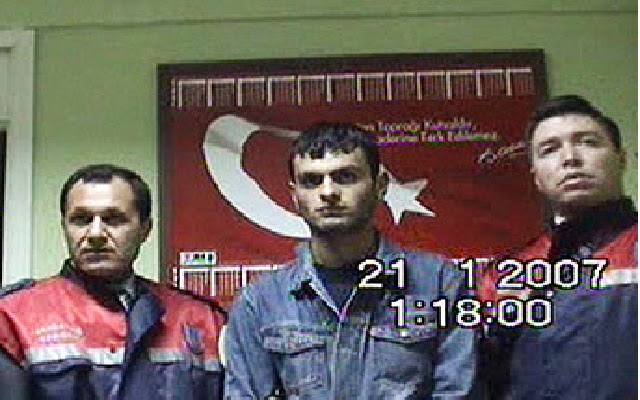


 Posts
Posts

